


Stains Under a Rooftop Unit
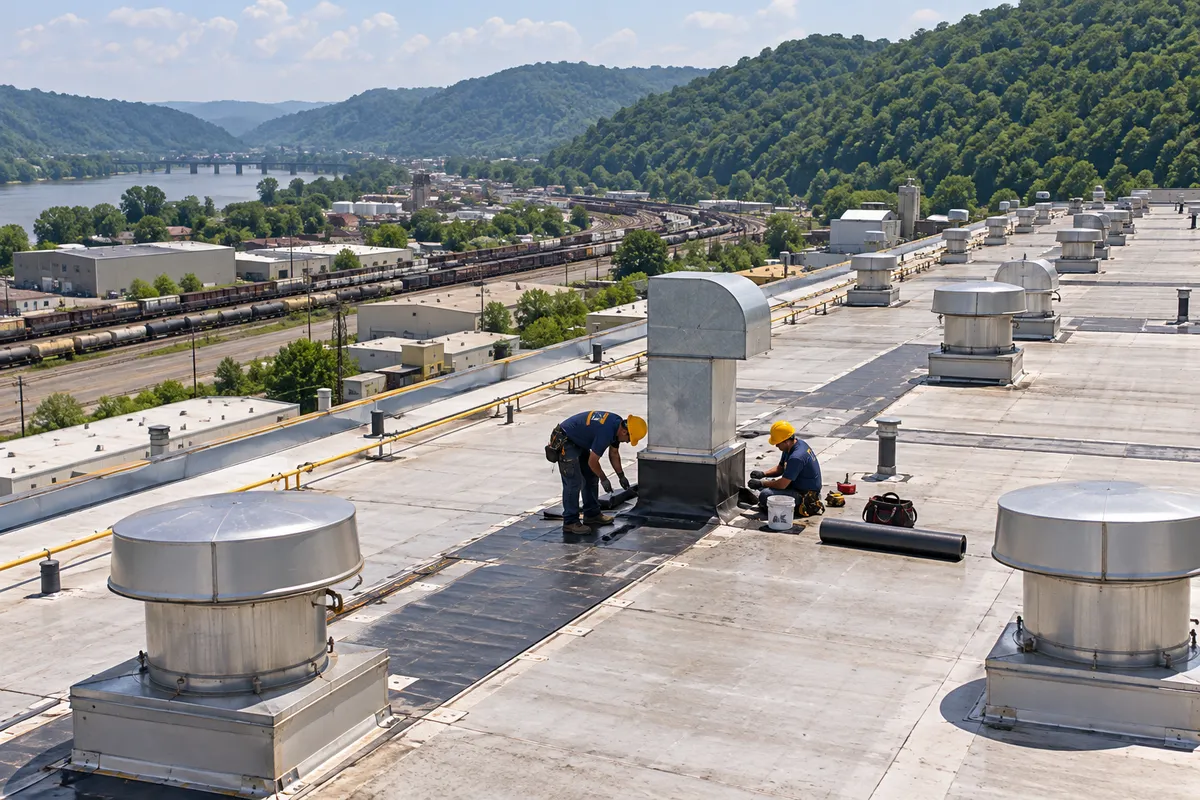
Ceiling tile spotting near an RTU usually traces to the curb flashing or a cracked counterflashing above it rather than the open field of the roof.
Boyd County · Commercial Only
As an Ashland commercial roofing contractor, we install, replace, and repair roofs on commercial buildings, from the deck and insulation up to the membrane, edge metal, and drains.
What We Install
An Ashland commercial roofing contractor should match the system to the roof in front of it. Six services cover the low-slope and metal roofs we work on.
Leaks And Damage
Open laps, split flashing at a curb, a clogged drain, or a punctured sheet under a rooftop unit. We trace the water and fix that detail.
White Single-Ply
Heat-welded white membrane for warehouses, retail, and offices with wide low-slope roofs, where fewer seams and a cooler surface pay off.
Rubber Membrane
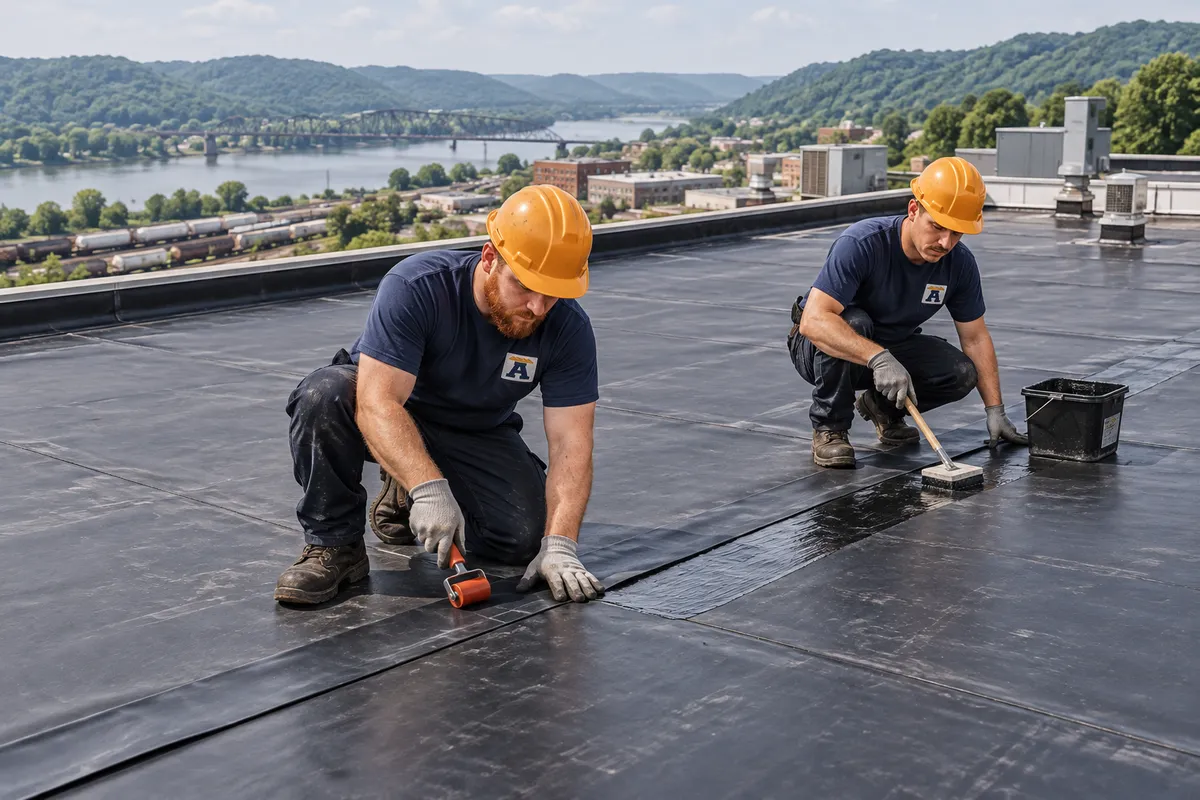
Synthetic rubber sheet with taped laps, a strong fit for plain rectangular roofs, older warehouses, and recovers over a dry existing roof.
Low-Slope Roofs
Worn built-up, modified, or single-ply roofs with ponding near drains. We decide between recover and tear-off, then add taper where water sits.
Plants And Warehouses
Process exhaust, heavy curbs, and roof hatches on plants that keep running. Sections open and close in one shift around production.
Standing Seam And R-Panel
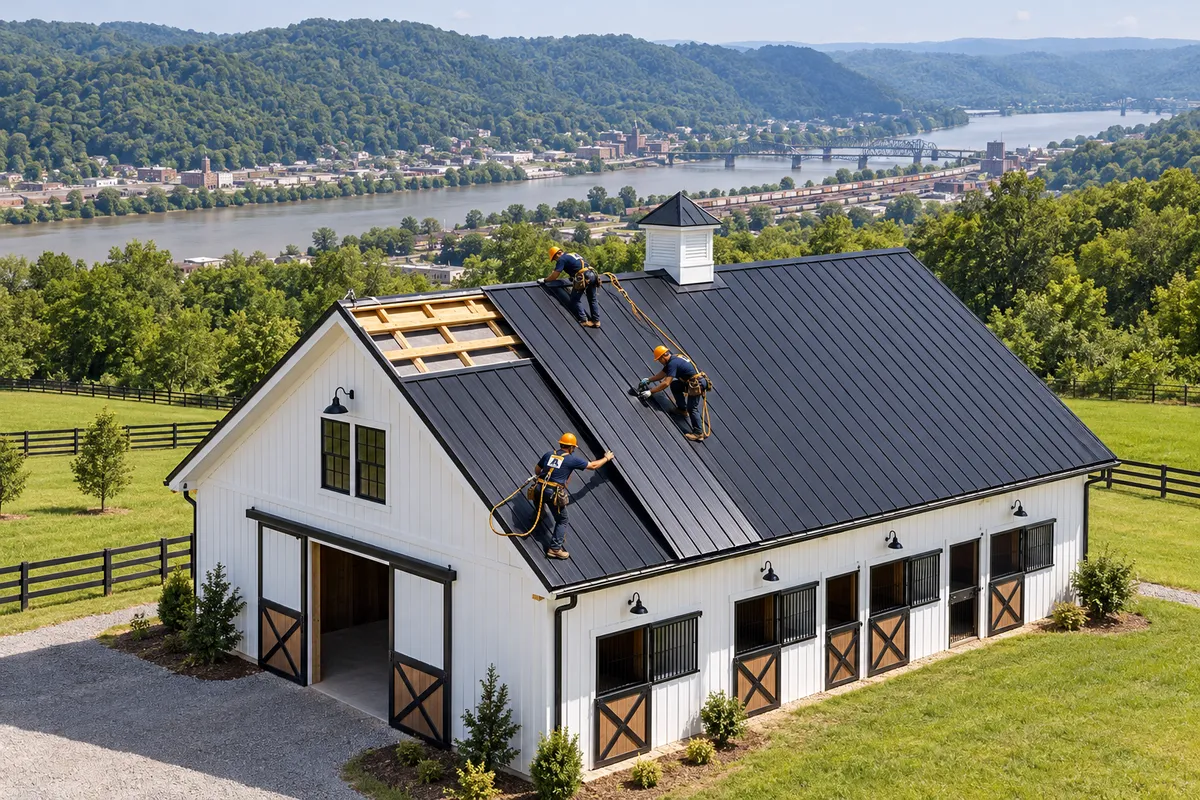
Steel roofs for shops, barns, and plants: new panels, retrofit framing over a flat roof, fastener and lap repairs, and storm walks.
On The Roof
Most calls start with one of these six. Each one points to a different detail on the roof, so the fix starts there.
Ceiling tile spotting near an RTU usually traces to the curb flashing or a cracked counterflashing above it rather than the open field of the roof.
Ponding rings and dirt marks near drains show where the roof lost its slope or a drain sits high. Taper or a new drain body corrects it.
Split seams let water run sideways under the membrane. On EPDM the T-joints near drains open first; on TPO a cold weld peels at the edge.
Spongy insulation means water already got in. A core cut shows how far it spread before anyone decides between patching and tear-off.
Raised screw heads and cracked washers on R-panel roofs let rain in along every purlin line. Oversized screws with new washers close them.
Wind off the Ohio River works coping caps and gravel stop loose, and the membrane behind them lifts next. Cleats and fasteners hold it down.
How It Works
Every job follows the same order, whether it is one leaking curb or a full tear-off on a warehouse.
A roof walk records the membrane or panels, every curb and drain, the edge metal, and the deck from inside. Core cuts show what the surface hides.
You get the findings in writing: repair, recover, tear-off, or new metal, with the insulation plan and the details that change.
The permit goes to the office that covers your address. Work dates are set around shifts, deliveries, and rooftop unit shutdowns.
Crews open only the area they can close that day, then tie the new roof to the old with a night seal before leaving.
Seams get probed, drains get water-tested, and the edge metal gets checked before the job closes out with photos.
Call and tell us where the stain is and what sits on the roof above it. That points the first visit at the right curb, drain, or seam.
What Changes
A replacement done in the right order fixes more than the membrane. These are the parts of the roof that improve.
Wet boards come out and new polyiso goes in, so the roof holds its insulating value and the deck stops rusting under trapped water.
Tapered insulation and crickets send water to drains and scuppers instead of letting it sit against curbs and parapet walls.
Curbs get new flashing and counterflashing at the right height, which is where most leaks on older Ashland roofs begin.
Wide TPO and EPDM sheets cut down the number of seams, and every new lap is probed or rolled and checked before the crew moves on.
New edge metal and coping fastened to sound nailers keeps wind from peeling the membrane back at the perimeter.
Your Options
Three paths, and the condition of the insulation decides most of it. Here is how they compare on a typical Ashland low-slope roof.
| Factor | Repair | Recover | Tear-Off |
|---|---|---|---|
| When it fits | Leaks at a few details, dry insulation | One existing roof, dry insulation, solid deck | Wet insulation, rusted deck, or two roofs already |
| What gets replaced | Flashing, seams, drains, or panels at the problem | New cover board and membrane over the old roof | Everything down to the deck |
| Deck inspection | From inside only | Spot checks at core cuts | Full view as sections open |
| Edge and drain heights | Unchanged | Raised with the added layers | Reset to the new roof |
| Noise and debris | Low | Lower | Highest, with daily cleanup |
Service Area
We take commercial roofing work in Ashland and ten towns nearby. Outside them? Call us or send us a message.
Ashland
Home base, from downtown inside the floodwall to the shops and plants along US 23.
Common Questions
Short answers to what Ashland owners ask before they call. The full set is on the commercial roofing FAQ.
Scope
Everything from the deck up. On a warehouse or office roof that means rigid insulation, cover board, and a TPO or EPDM membrane, plus the drains, scuppers, flashing, coping, and walk pads that keep water moving.
Shops, barns, and plants with pitched roofs get steel panels, trim, and closures instead of membrane.
Choosing A System
The current roof answers most of it: slope, drain locations, ponding marks, kitchen or process vents, foot traffic to rooftop units, and whether the insulation is dry.
A dry, flat roof with light traffic fits single-ply. A pitched roof with failing panels points to new metal.
Cost
Square footage, the system, insulation thickness, and how many curbs, pipes, skylights, and drains need flashing. Edge metal and gutter lengths add to it.
Crane access matters downtown, where street space is tight. A roof crowded with units costs more per square foot than a plain roof of the same size.
Permits
Inside city limits, the job goes through the city of Ashland building inspector. Boyd County itself has no county building inspector, according to the state contact sheet.
A building with an Ashland mailing address but outside city limits goes to the Boyd County commercial permit contact instead.
Buildings
Yes. Warehouses are the most common roof we see: wide spans, interior drains, and long runs of edge metal. Mechanically attached TPO or EPDM covers that area fast.
Thicker sheet and walk pads go along forklift-served dock roofs and rooftop unit paths.
Timing
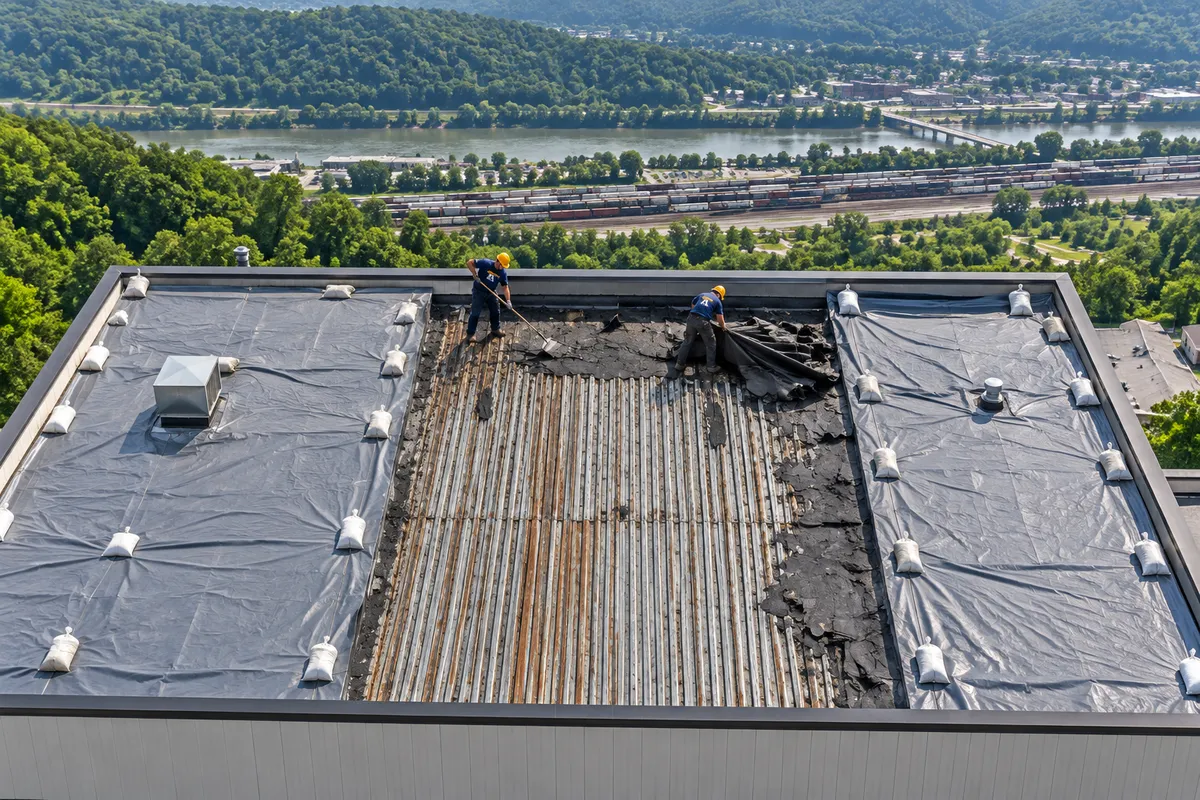
In most cases, yes. Crews tear off only what they can close that day, seal the edge each night, and protect stock and equipment under the work area with plastic inside.
Noisy work and adhesive odors are scheduled around your hours and air intakes.
Send the roof size and what you are seeing, or call and walk us through it. A roof walk comes first.