Older Low-Slope Warehouses
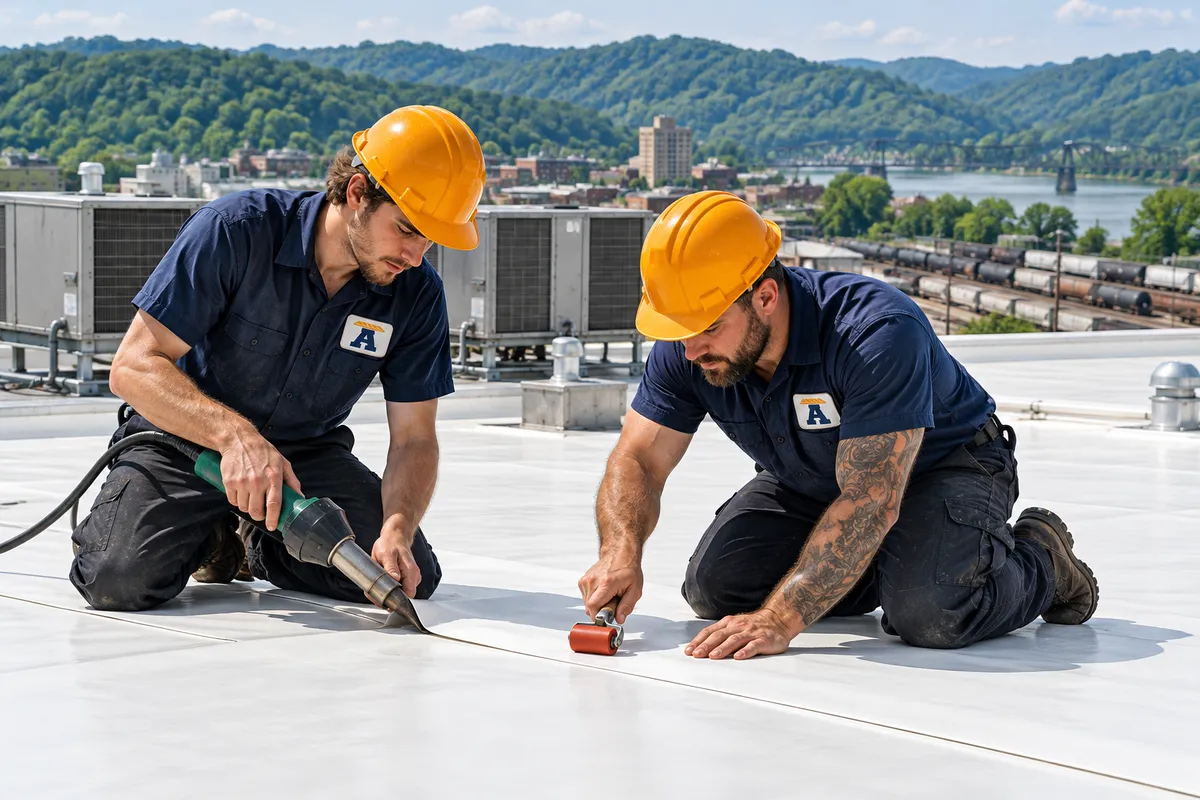
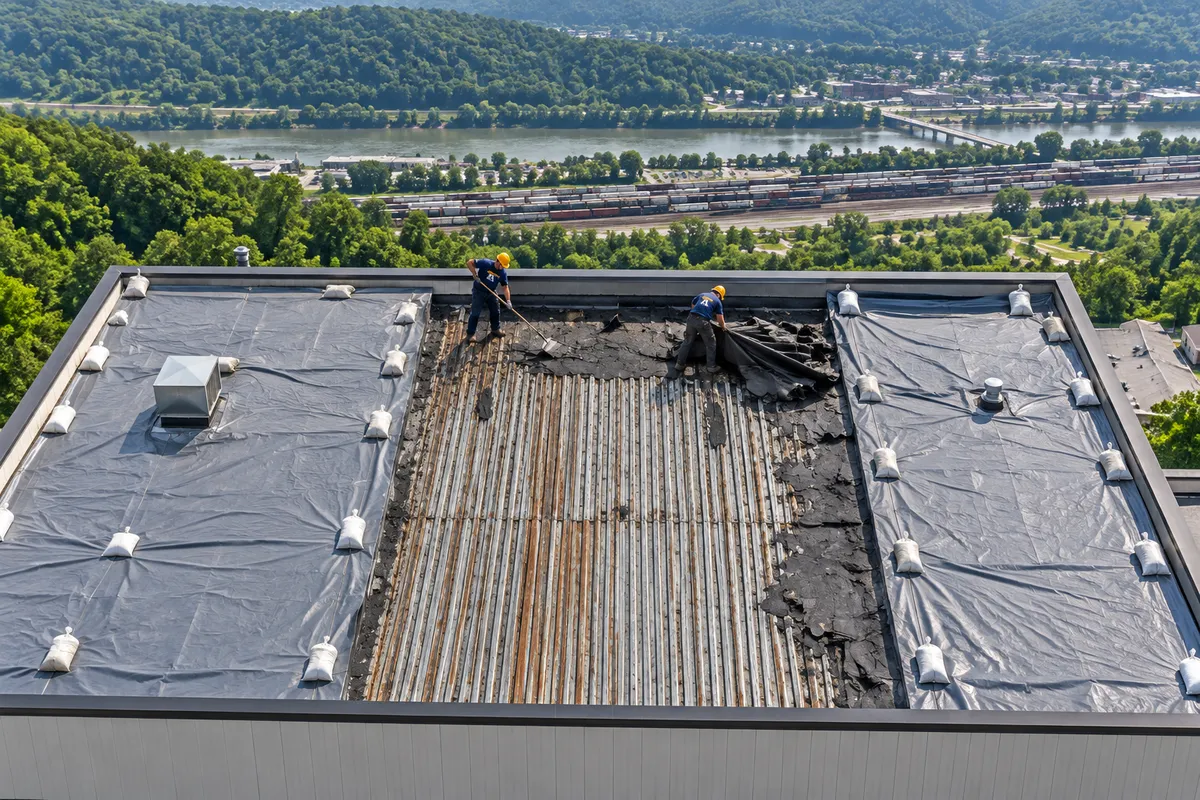
Long, plain roofs on older warehouses take large EPDM sheets with few seams, often after a tear-off down to the deck.
Rubber Membrane Roofing
As an Ashland EPDM roofing contractor, we install rubber membrane on low-slope commercial buildings, with primed and taped seams and a patch over every T-joint.
Is This Roof A Fit?
As your Ashland EPDM roofing contractor, we put rubber sheet on simple, low-slope roofs. A few conditions point to work first or another sheet.
| Factor | Good Fit | Fix First Or Look Elsewhere |
|---|---|---|
| Roof shape | Plain rectangles with few curbs or vents | Many curbs and odd shapes that need welded details |
| Existing roof | One dry roof under a recover with cover board | Wet insulation or two roofs already on the deck |
| Rooftop exhaust | Office, storage, and warehouse vents | Grease or oil mist, which swells rubber |
| Surface color | Black for storage, white for cooled space | Black sheet over a hot, cooled office with no plan for white |
| Penetrations | Pipes and supports detailed with boots and pans | Old pitch pans no one plans to refill |
Roof Conditions
These are the roofs where rubber sheet earns its keep, along with the details that need care.
Long, plain roofs on older warehouses take large EPDM sheets with few seams, often after a tear-off down to the deck.
Once core cuts show dry insulation, EPDM can go over the existing roof with a cover board, skipping the tear-off.
Uncured flashing forms around odd shapes, which helps on older roofs crowded with pipes, vents, and equipment legs.
Where three sheets meet, laps that skipped primer or roller pressure open first, often right beside a drain.
Dark rubber absorbs heat, so snow and ice clear sooner on unheated storage buildings in a Kentucky winter.
Flashing that has slid down a parapet wall gets replaced and fixed with a termination bar under the coping.
Options
Each option is chosen after core cuts show what the current roof and insulation hold.
The old roof comes off to the deck, wet boards are replaced, and new insulation, cover board, and black or white EPDM go down.
Over one dry existing roof, a cover board and new EPDM go on top. Drains and edge heights are checked against the added layers.
A lighter sheet for conditioned offices and retail, where a cooler summer surface outweighs the higher roll cost.
Lap cleaning, primer, cover tape, new pipe boots, and pitch pan refills on rubber roofs that still have life left.
Benefits
Rubber membrane brings a few clear advantages on the right Ashland roof.
EPDM stays pliable in winter, so the sheet handles freeze-thaw movement and can be installed through cooler months.
Big panels cover simple roofs with long runs and few seams, and fewer seams leave fewer places for water to start.
Uncured flashing wraps irregular supports and pipes that are hard to flash with rigid pieces.
When the old roof is dry, a recover with cover board avoids removing and hauling the existing layers.
A recover only works over dry insulation. Core cuts on the first visit answer that before any quote is written.
Process
Seam work on rubber follows a set order, because primer and roller pressure decide how well each lap holds.
Core cuts or a moisture survey show whether the old insulation is dry and how many roofs already sit on the deck.
Wet areas are cut out, the deck is checked, and insulation and cover board go down for a tear-off or a recover.
EPDM panels are unrolled and left to relax, then attached or adhered across the field.
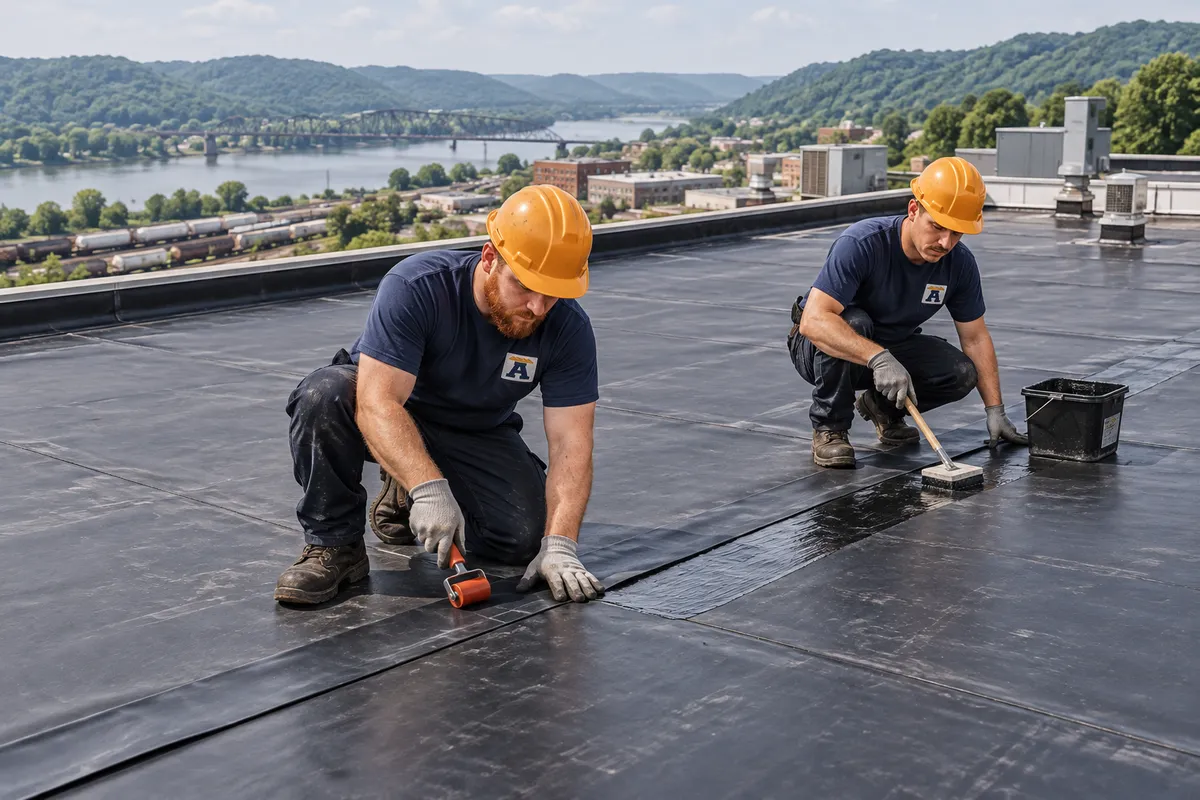
Laps are cleaned, primed on both faces, taped, and rolled toward the edge, with a patch over every T-joint.
Walls get termination bar, pipes get boots, odd supports get pitch pans, and edge metal is stripped in with cover tape.
Related Services
EPDM is one of two single-ply options. Older roofs with drainage problems may need flat roof work first.
Roofs with many curbs or a need for a white surface often go to heat-welded TPO.
TPO RoofingRoofs with ponding and wet insulation need tear-off and taper before any new sheet.
Flat RoofingQuestions
More answers are on the commercial roofing FAQ.
Maintenance
Walk it twice a year and after storms. Check laps near drains and T-joints for lifting edges, refill pitch pans as the sealer shrinks, and clear drains of leaves and silt.
Small lap repairs with primer and cover tape keep a rubber roof going for years when they are caught early.
Basics
EPDM is a synthetic rubber sheet that stays flexible in cold weather. It fits older low-slope warehouses, plain rectangular roofs with few curbs, and recovers over a dry existing roof.
White EPDM is made for owners who want a lighter surface.
Seams
The lap area is cleaned to bare rubber, both faces are primed, and seam tape is pressed in with a roller. Every T-joint gets a patch.
Rubber does not heat-weld, so prep and roller pressure decide how the lap holds.
Color
Black sheet absorbs heat and melts snow sooner, which suits unheated storage. White sheet reflects more sun and costs more per roll, which suits cooled offices and retail.
White also shows dirt and needs cleaning.
Recover
Yes, when the old roof and insulation are dry and the deck is solid, with a cover board between them. Core cuts confirm moisture and the number of layers first.
Wet sections get cut out and replaced, or the job becomes a tear-off.
Details
Parapets get flashing fixed with a termination bar under the coping, pipes get prefabricated boots, and odd supports sit in pitch pans filled with pourable sealer.
Pitch pans need refilling over time, so they go on the maintenance list.
Send the roof size and the age of the current roof. Core cuts on the first visit tell us whether recover is on the table.