Curb Flashing at Rooftop Units
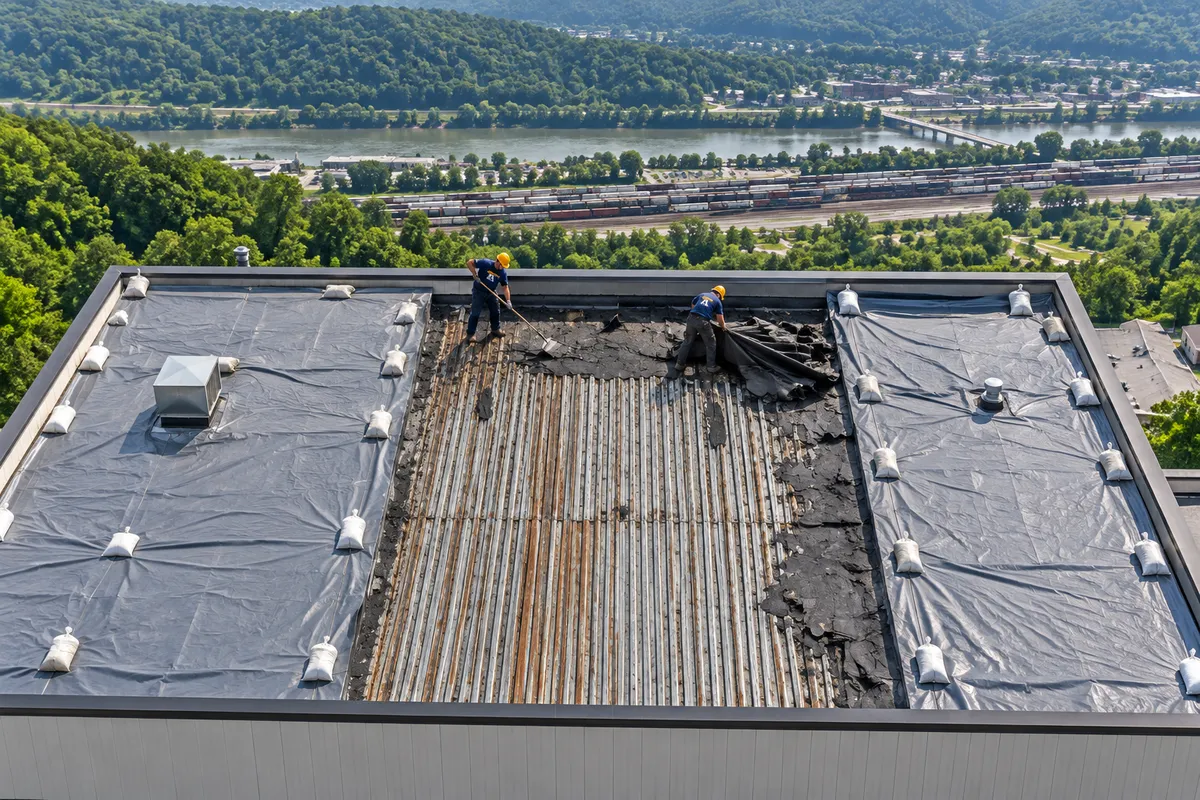
Base flashing pulls away from the curb and the counterflashing above it cracks, so rain runs behind the membrane and drips from the tile below.
Leak And Damage Repair
As an Ashland commercial roof repair contractor, we find where water enters a membrane or metal roof and repair that seam, curb, drain, or panel.

Is This Roof A Fit?
As your Ashland commercial roof repair contractor, we repair when the trouble sits at a few details and the rest of the roof still holds. These factors decide it.
| Factor | Good Fit | Fix First Or Look Elsewhere |
|---|---|---|
| Insulation | Dry under the leak once a core cut is taken | Wet across large areas, so the boards need replacing |
| Leak pattern | One curb, drain, seam, or penetration | Stains spread across several bays with no single source |
| Membrane age | Flexible sheet that still takes a patch or weld | Brittle, shrinking, or crazed sheet that cracks when walked |
| Metal panels | Rust on the surface, solid steel underneath | Holes through the panel or rusted purlins below |
| Past patches | A few clean repairs that still hold tight | Layer on layer of mastic hiding the original detail |
Roof Conditions
Water rarely shows up inside right below where it entered. These six sources account for most repair calls we get.
Base flashing pulls away from the curb and the counterflashing above it cracks, so rain runs behind the membrane and drips from the tile below.
A loose clamping ring or torn target patch lets water slip under the sheet at the lowest point of the roof, right where it collects.
Cold welds on TPO and unprimed tape on EPDM open over time. Water travels inside the lap for feet before it finds a deck seam.
Sealer in pitch pans shrinks and pipe boots split in sun, opening a ring around gas lines, vents, and equipment legs.
End laps lose their butyl tape and screws back out, so every rain sends water along the purlin and into the wall line.
Open coping joints feed water down the inside of the wall, which reads as a roof leak even when the field is dry.
Options
Repairs are matched to the roof that is already there, with the same material and method where the system allows.
Hot-air rewelds on TPO, primer and cover tape on EPDM laps, and stripping plies on built-up roofs, each probed or rolled when done.
New base flashing, termination bar, and counterflashing at rooftop units, walls, and hatches, set high enough to clear standing water.
Clamping rings reset, target patches replaced, and retrofit drain inserts set where the old drain body has cracked or rusted.
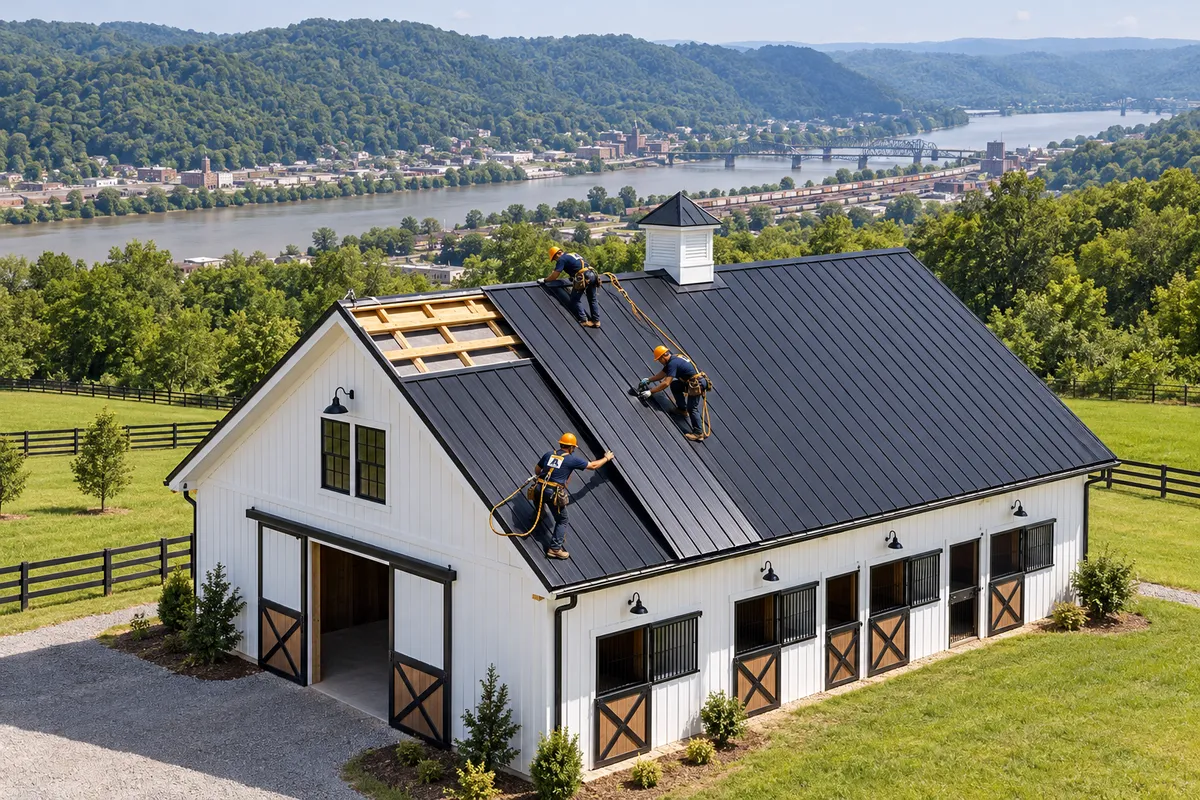
Backed-out screws replaced one size up with new washers, laps resealed with butyl tape, and holed panels swapped for matching steel.
Benefits
A repair that targets the real entry point protects the parts of the building that cost the most to replace.
Stopping water at the curb or lap keeps it from spreading sideways through the polyiso, which is what turns a small leak into a tear-off.
Ceiling tile, inventory, and equipment below stop taking drips once the source detail is closed and tested.
Sound repairs buy time to budget and schedule a full replacement instead of reacting to the next storm.
Photos of every repair go into a log, so the next leak call starts with what has already been fixed and where.
Call and tell us where the water shows inside and what sits above it on the roof. A quick description sends the first visit to the right detail.
Process
Repairs follow a short order so the fix lands on the detail that failed instead of the stain below it.
We walk the roof above the stain, check curbs, drains, and laps upslope, and look at the deck from inside where a ceiling allows.
Probing seams, lifting loose flashing, and a core cut where the roof feels soft show where water enters and how far it traveled.
The crew fixes that curb, lap, drain, or panel with material that matches the existing roof system.
Drains and repaired areas get water-tested where possible, and new welds are probed along their full length.
You get photos and notes on what was fixed, plus any other details that need attention soon.
Related Services
If the roof needs more than a few repairs, these two services are usually the next step.
Wet insulation over a large area points to a flat roof recover or tear-off with taper added at the drains.
Flat RoofingSteel roofs with rusted-through panels move from repair to panel replacement or a new metal roof.
Commercial Metal RoofingQuestions
More answers are on the commercial roofing FAQ.
Leaks
We start above the stain and work upslope, since water travels along laps, flutes, and purlins before it drips. Curbs, drains, and pipe boots get checked first.
Probing seams and a core cut in soft areas confirm the entry point before any repair goes on.
Seams
Yes, when the membrane is still flexible. TPO laps get cleaned and rewelded with hot air, then probed. EPDM laps get cleaned, primed, and covered with seam tape rolled firmly into place.
Brittle, shrinking sheet that cracks underfoot needs replacing instead.
Drains
Most drain leaks come from a loose clamping ring, a torn target patch, or a cracked drain body. Water collects at the drain, so any gap there takes in a lot of it.
A retrofit insert with a new ring seals an old drain without opening the deck.
Repair Or Replace
Wet insulation across large areas, a rusted steel deck, or leaks with no single source mean repairs are only buying weeks.
Two existing roofs on the deck also rule out a recover, so a tear-off becomes the next step.
Metal
Yes. Backed-out and rusted screws get replaced one size up with fresh washers, leaking laps get new butyl tape and stitch screws, and holed panels are swapped for the same profile and gauge.
Records
Write down where each stain shows, the date, and the weather that day. Photos of the ceiling next to a note on what sits above it on the roof speed up the trace.
Tell us where the water shows up and how long it has been happening. We start with a roof walk above it.