Blisters in Built-Up Roofing
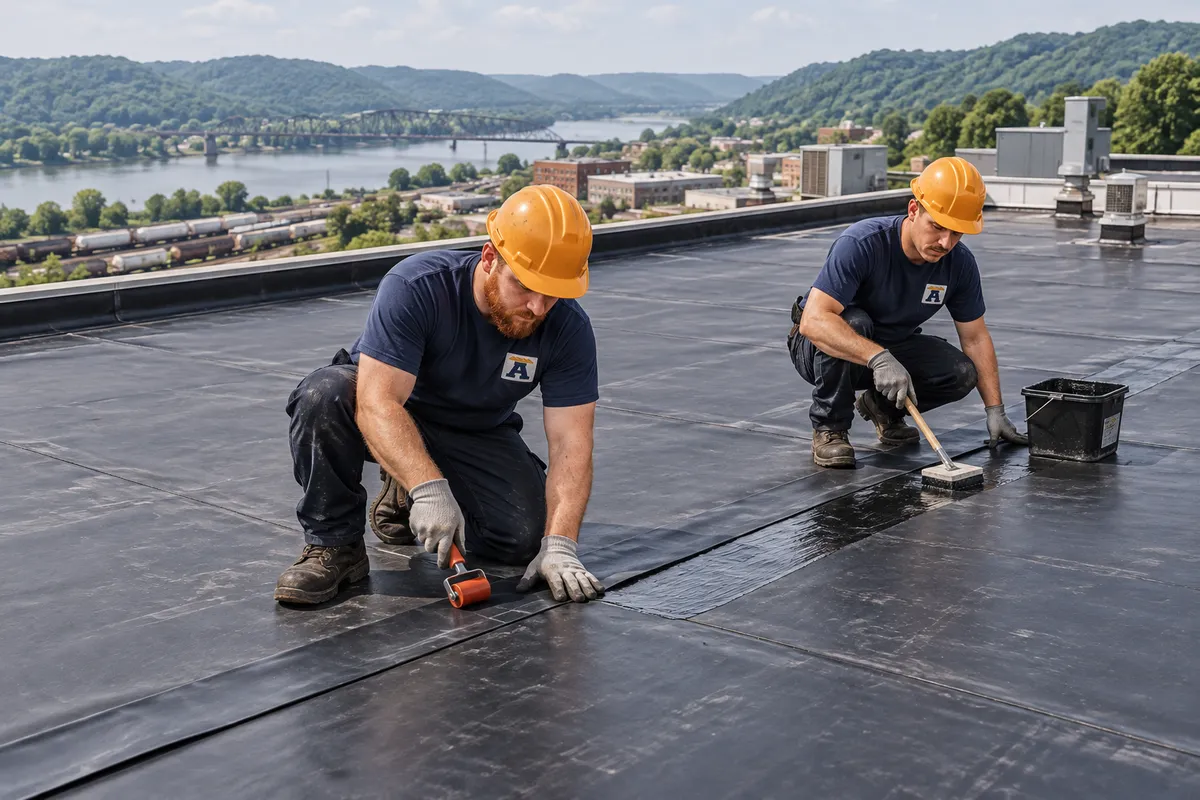
Raised blisters and alligatored asphalt on an old built-up roof show the felts are drying out and letting water between plies.
White Single-Ply Roofing
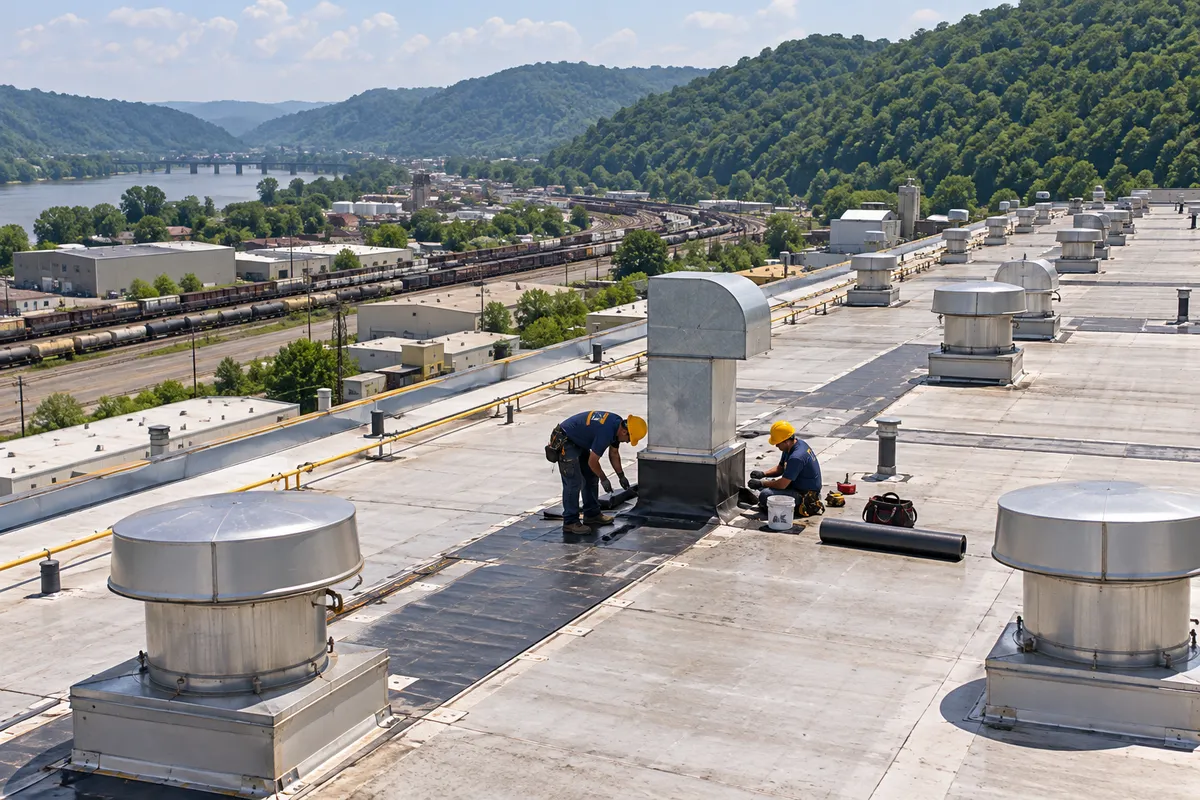
As an Ashland TPO roofing contractor, we install white membrane over new insulation and cover board, with every lap hot-air welded and probed.
Is This Roof A Fit?
As your Ashland TPO roofing contractor, we fit TPO to most low-slope commercial roofs. A few conditions call for a different sheet or work before installation.
| Factor | Good Fit | Fix First Or Look Elsewhere |
|---|---|---|
| Roof slope | Flat or low-slope with drains or scuppers | Pitched roofs that shed water fast, better served by metal |
| Building use | Warehouses, retail, offices, schools | Kitchen hoods or process vents dropping grease on the sheet |
| Roof size | Large open areas where wide rolls cut seams | Tiny roofs crowded with odd supports, often easier in EPDM |
| Existing insulation | Dry boards or a planned tear-off | Wet boards left in place under a recover |
| Foot traffic | Service paths covered with walk pads | Heavy daily traffic with no pads or thicker sheet planned |
Roof Conditions
These conditions on an existing roof usually mean the next step is a new single-ply system rather than another patch.
Raised blisters and alligatored asphalt on an old built-up roof show the felts are drying out and letting water between plies.
Standing water days after rain marks low spots. New TPO goes over tapered insulation that sends water to the drain.
Aging sheet pulls at the perimeter and around curbs, stretching flashing until the laps tear open at corners.
Rooftop units ringed with mastic patches point to flashing that was never set high enough above the field.
A black roof on a cooled office or retail space absorbs summer sun. White TPO keeps the surface cooler.
Spongy spots near seams mean wet boards. Those come out during tear-off so the new sheet sits on dry insulation.
Options
Attachment and thickness are chosen for the deck, the wind exposure at the edges, and the traffic the roof sees.
Screws and plates in the seam laps hold the sheet to a steel deck. It installs fast across wide, plain warehouse roofs.
Bonding adhesive over cover board holds the whole sheet. It suits roofs with many curbs, windy edges, and a quieter surface.
Plates under the sheet join to it with a magnetic tool, which cuts fasteners in the seams and gives an adhered look.
Rewelds, patches, new walk pads, and flashing around added rooftop units on TPO roofs that still have years left.
Benefits
TPO earns its place on Ashland warehouses and offices through its seams, its color, and its matching flashing pieces.
Hot-air welds fuse the two sheets into one, so laps hold up where water sits for a while after a storm.
The white surface reflects sunlight, which keeps the membrane and the deck below cooler on a July afternoon.
Corners, pipe boots, and curb wraps are made from the same material and welded to the field sheet.
Wide rolls cover large warehouse and retail roofs with fewer laps, and fewer laps mean fewer places to fail.
Send the roof size and how many rooftop units it carries. We start with a roof walk and core cuts to see what sits under the current roof.
Process
A new TPO roof goes on in sections, each one closed and sealed before work stops for the day.
We record the deck, drains, curbs, and edge metal, and pull core cuts to see how many roofs are already on the building.
One section comes off, the deck is checked, and new polyiso, taper, and cover board go down the same shift.
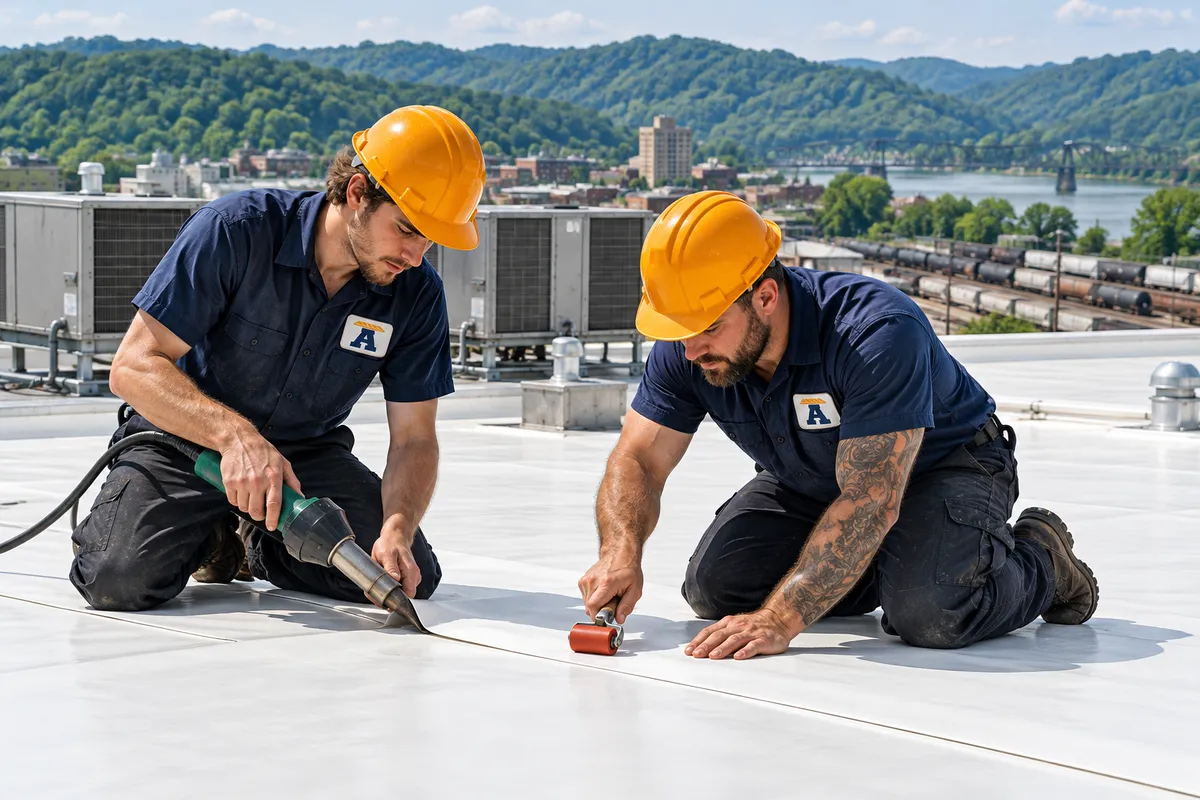
The crew lays TPO, runs a test weld on scrap, then welds every lap and probes it end to end.
Curbs, drains, pipes, and parapets get matching TPO pieces welded in place, then coping and edge metal close the perimeter.
A final probe of every seam and detail, walk pads on service paths, and photos for your records.
Related Services
Some buildings fit a different sheet or need plant-level detailing. These two are the closest alternatives.
Plain rectangular roofs and recovers over a dry existing roof often go to EPDM rubber instead.
EPDM RoofingPlants with process exhaust and heavy equipment need chemical-rated sheet and reinforced service paths.
Industrial RoofingQuestions
More answers are on the commercial roofing FAQ.
Basics
TPO is a white thermoplastic sheet whose seams are welded with hot air into one membrane. It reflects sunlight and its welded laps hold where water sits after a storm.
Wide rolls also cover big warehouse and retail roofs with fewer seams.
Seams
Robotic or hand-held welders melt the two sheets together along the lap. Heat, speed, and a clean lap decide the weld, so a test weld on scrap comes first each day.
Every seam is then probed, and any spot where the probe catches gets rewelded or patched.
Attachment
Screws and plates in the laps suit steel decks on big, plain roofs. Adhesive over cover board suits roofs with many curbs and windy edges.
Corners and perimeter zones get tighter fastening on any attached roof, since they take the most uplift.
Thickness
Sixty mil is the common middle choice on warehouse roofs. Thicker 80 mil sheet makes sense on roofs with heavy service traffic, a hail history, or a long planned life.
Walk pads along rooftop unit paths protect any thickness.
Flashing
Matching TPO pieces get welded to the field sheet. Curbs are wrapped and capped with counterflashing, drains clamp over the sheet, and parapets are covered up and over before coping goes on.
Each detail is probed like a field seam.
Weather
Yes. Dew on the sheet delays welding until it dries, and cold mornings change welder settings. That is why the test weld is repeated as the day warms.
Send the roof size and a few photos, or call. We walk the roof and pull core cuts before quoting a system.